
About SomaSolidarity
How SomaSolidarity stands out
Our work is distinctive because it goes beyond singular and conventional approaches. While somatic therapy and somatic experiencing focus on nervous system regulation and trauma release, our trauma-informed bodywork opens, releases, and re-shapes. It connects to what is next, as well as what is and what has been. Coaching and practices restore AND re-build. The bodywork is both energetic and structural. The result is transformation that is both gentle and powerful, forward-focused, rooted in your deepest longings, and guided by the innate wisdom of your own body.
What sets SomaSolidarity apart is the integration of bodywork, coaching, and group development with the grounding of meditation, mindfulness, and underlying principles derived from somatics and Buddhism. It weaves together personal and collective transformation.
The lessons of water & jellyfish
We are made mostly of water—fluid, adaptable, and self-cleansing. Connecting everything, it surrenders to its own flow. Each drop joins another, and together they become something vast.
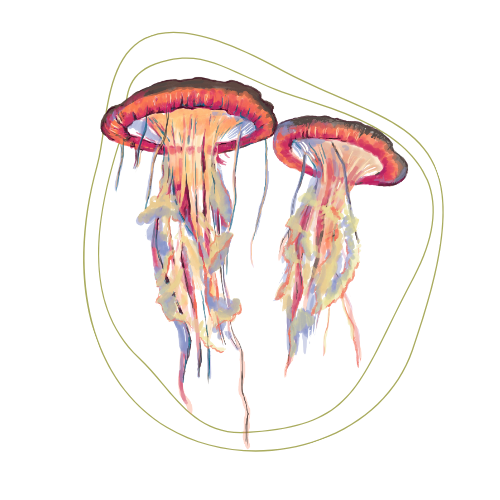
Jellyfish show us how to live inside this truth. Moving without force, embodying effortless resilience. Surviving through softness and sensitivity, teaching us that strength comes from yielding rather than resisting. Guides in deep waters, they trust unseen currents, live by instinct, and remain present with each pulse, each soft expansion and release.
SomaSolidarity is this same alignment within ourselves. It is deep connection with your living body—at home in your own skin, sourced and resourced by a pulse of energy and aliveness. Open, present, connected, and on purpose—like jellyfish glowing and gliding through water.
Collectively, jellyfish move together in harmony with the tides, many beings moving as one, without hierarchy, sustained by shared rhythms. SomaSolidarity arises in this way too—when our body, emotions, spirit, and mind act in deep unison. From this place of clarity and wholeness, we are both grounded in our own power and connected to something greater than ourselves.
To step into SomaSolidarity is to remember what it feels like to be held, supported, and carried. It is to trust your body’s innate wisdom—fluid, resilient, exquisitely sensitive. Healing begins with small ripples that spread outward, transforming personal restoration into collective possibility.
“Remember you are water. Of course you leave salt trails. Of course you are crying. Flow” - Adrienne Maree Brown
What is somatics all about?
“Soma” and “somatics” are hot words right now. They are often used simply to convey that something is related to the body. But, there is much more to it. There are as many definitions and types of somatic work as there are practitioners. “Soma” derives from the ancient greek, and translates to “the body in all of its animated aliveneness”. In the 70s, the term began to be used to recognize that the biological, psychological, social, and energetic qualities within us are integrated into the whole of how we “be”. Somatics encompasses: mood, energy, physicality, action, and relatability. Somatic presence and capabilities impact our personal well-being, relationships, productivity, influence, leadership, accountability, and impact.
Shifting Embodied History
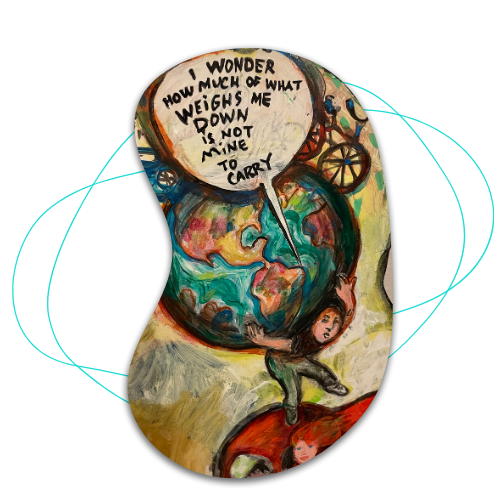
Through this work, we unwind long-held patterns—tightness, slackness, numbness, permeability, armoring—often rooted in minor or major trauma, or rooted in smart adaptations to our historical context that may have shifted or changed. These show up in posture, breath, movement, energy, and stillness; as well as in behavior, presence, language, and beliefs.
They are more than physical habits; they are embodied histories, shaping how we feel and act—and how others feel and act toward us.
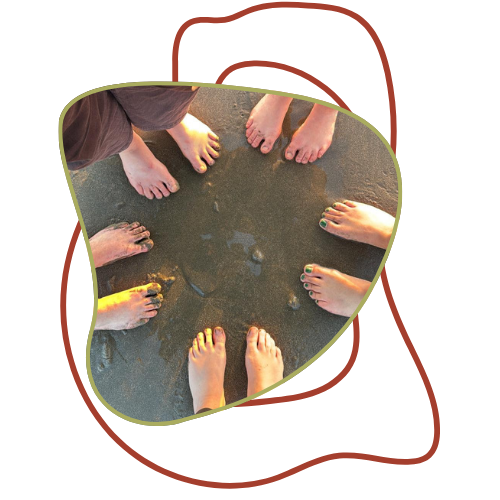
Some examples of the different facets of somatics:
Patterns of tension and ease in muscles, tissues, and organs
The flow or congestion of energy, breath, and sensation
How grounded or balanced we are emotionally or physically
The degree to which we make space for others
Messages conveyed by voice quality, language used, eye contact, or body language
The degree of vulnerability or intimacy we express and accept
Our ability to take action, make decisions, manage boundaries, or coordinate with others
The interpretations and beliefs we generate from experience and sensing our environment
How we take action toward the future and behave in alignment with what we care about
Our ability to feel and be with a wide range of emotions
Patterns of numbing, disconnecting, avoidance, and distraction
How comfortable we feel in our own skin, in conflict, in facing things
Our capacity for feeling joy, resilience, and purpose